
Fish AI - AI Fishing App
GymBros Inc.Sports
4.7340.00 Reviews
- Version
- 1.2.1
- Installs
- 100.00K
- Age Rating
- Everyone
Screenshots
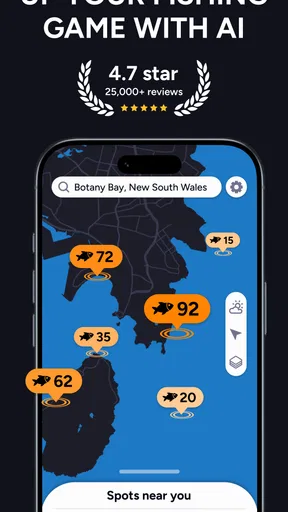
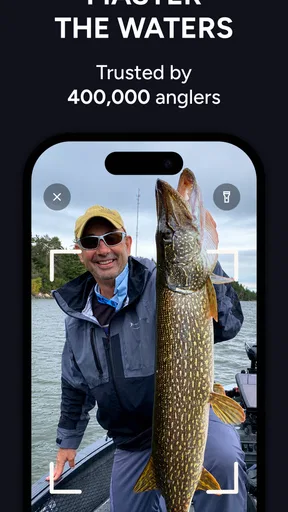
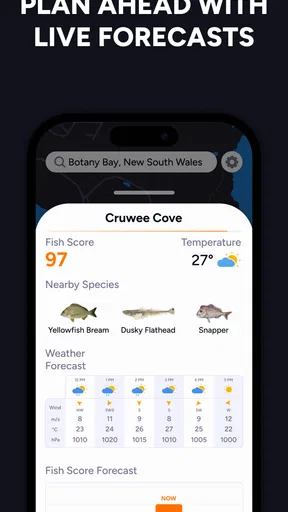
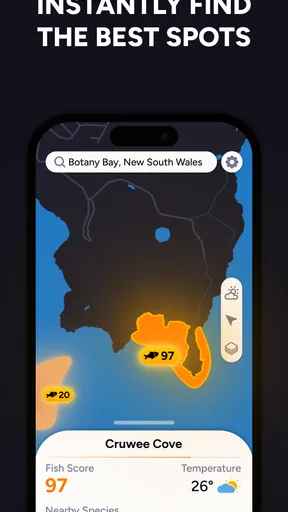
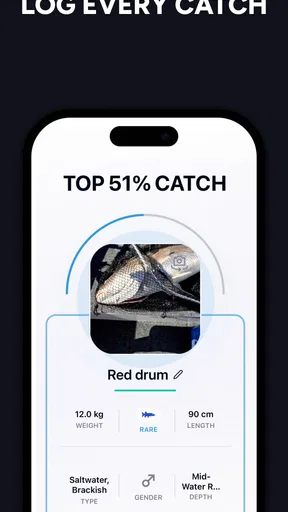
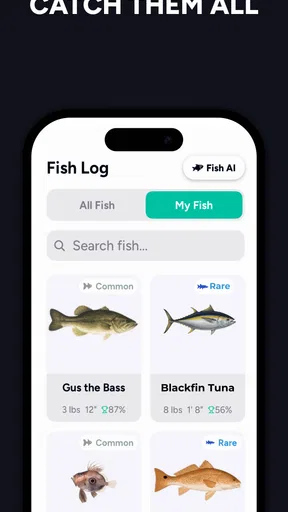
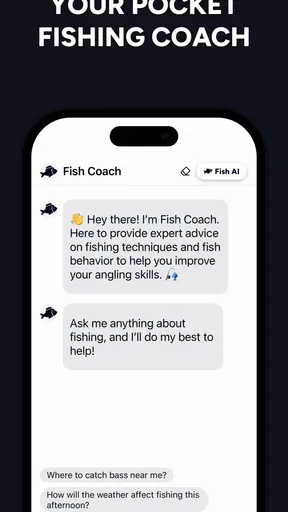
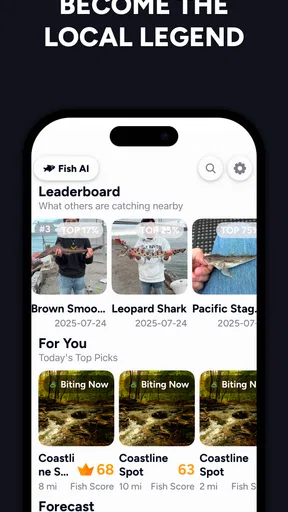
Our Review of Fish AI - AI Fishing App
 Analysis by Appyee
Choosing a fishing app is less about finding the longest list of features and more about deciding what kind of help you want beside the water. Some anglers mainly need a place to record catches, others want weather information before leaving home, and some would rather have an intelligent starting point than sort through several separate tools. I spent time with Fish AI - AI Fishing App from GymBros Inc. with that practical question in mind: does it make a fishing day easier, or does it simply add another screen to check?
My overall impression is that this is a focused sports app for anglers who want spots, forecasts, and catch-related guidance gathered into one experience. Its central idea is Fish AI, presented as a way to help users make more informed decisions instead of relying entirely on guesswork. That does not turn fishing into a predictable activity, and I would not treat any suggestion as a guarantee. Still, the app has a useful role when you want to prepare quickly, compare conditions, and keep your planning process more organized.
How I judged Fish AI before recommending it
I looked at the app through four questions that matter in real use. First, can it help me decide where and when to fish? Second, does the information feel practical rather than decorative? Third, can it fit into a normal outing without demanding constant attention? Finally, is it a better choice than using a weather app, a map, a fishing log, and personal notes separately?
That last comparison is important. A dedicated fishing app does not need to replace every tool on your phone. It needs to reduce the small amount of friction that appears before and during a trip. If I still have to jump between several apps to understand the conditions, the convenience disappears. On the other hand, if I need highly specialized navigation, detailed equipment management, or a community built around a particular local fishery, a broader or more established alternative may be a better fit.
The app is free to start, which makes testing this workflow fairly approachable. Optional in-app purchases range from $9.99 to $79.99 per item, so I would pay attention to what is included before committing to anything. The free entry point is useful for deciding whether its style of guidance actually matches your habits, while the purchase range means frequent users should think about long-term value rather than assuming every useful function is included at no cost.
Fish AI is rated for Everyone and runs on Android from version 8.0 onward. That broad compatibility is helpful if you use an older phone as your outdoor device, although the experience will still depend on your handset, connection, and how comfortably you can read the screen outside. The app was released on July 4, 2025, and its current version is 1.2.1, so I see it as a relatively young product rather than a fully mature fishing reference that has been refined for many years.
What the planning workflow feels like
The strongest way to use the app is before you leave. I would open it while deciding between a familiar spot and a new one, check the available conditions, and use the forecast information to shape the plan. That sequence is more valuable than opening the app only after arriving and expecting it to solve every uncertainty. Fishing decisions are usually a combination of timing, location, weather, water knowledge, and patience; Fish AI can support that process, but it cannot replace local judgment.
A practical routine is to make a short decision rather than endlessly browse. Start with the area you are considering, inspect the forecast, then ask whether the expected conditions suit the kind of outing you actually want. If the weather looks unstable, the best choice may be a shorter trip near home rather than abandoning the day entirely. If conditions appear comfortable, you can spend more time preparing tackle and bait instead of researching from scratch.
One useful habit is to separate the app’s suggestion from your final decision. I would note what Fish AI points toward, then compare it with what I already know about access, water level, recent results, and safety. This two-step approach avoids a common mistake with intelligent recommendation tools: treating a confident-looking answer as personal knowledge of a place. The app can help narrow the options, but your experience remains the deciding layer.
A realistic weekend example
Imagine I have a free Saturday morning but only a few hours available. I do not want to spend the first part of the day moving between a general weather service, a map, old messages, and a note-taking app. I would use Fish AI to review possible spots and the forecast, then choose the option that gives me the best balance of travel time, expected conditions, and the kind of relaxed outing I want.
That scenario shows where the app earns its place. It is not necessarily about discovering a secret location or predicting a guaranteed catch. It is about reducing hesitation. If the forecast changes, I can reassess before loading the car. If the conditions are not ideal, I can shorten the trip or choose a familiar location. The value is in making a reasonable plan with less scattered research.
For a beginner, this can also be less intimidating than starting with a blank map and no idea which factors matter. The app gives the planning process a structure. I would still encourage a new angler to learn local rules, access restrictions, safe handling, and seasonal knowledge from reliable local sources. Fish AI is most useful as a planning companion, not as a substitute for responsible preparation.
Where Fish AI is strongest
The clearest strength is concentration. The app brings together fishing spots, forecast information, and catch-oriented intelligence around one activity. That focus makes it more relevant than a general weather app when I am already thinking in fishing terms. A normal forecast may tell me whether rain is expected, but a fishing-centered tool encourages me to consider the outing as a whole rather than looking at weather in isolation.
Its second advantage is the possibility of faster decisions. Many fishing plans fail to happen because preparation becomes tedious. When information is scattered, I may postpone the choice of location or simply return to the same place without checking whether the conditions have changed. A focused app can interrupt that habit by giving me a single starting point for comparing options.
Fish AI is also appealing to anglers who enjoy using technology without wanting a complicated setup. The idea is easy to understand: check potential spots, review the forecast, and use the app’s intelligence to guide the next step. That simplicity matters on a phone, especially outdoors, where I do not want to spend a long time navigating menus with wet or cold hands.
Another less obvious strength is that it can help turn vague preferences into a repeatable routine. Instead of saying, “The weather looks fine, so I will go somewhere,” I can ask myself what I am optimizing for today: a short trip, a new location, comfortable conditions, or a better chance of making use of limited time. The app becomes more useful when I use it to clarify that choice rather than expecting one universal recommendation.
I also like the possibility of using catch information as a feedback loop. After an outing, I can mentally compare what the app suggested with what actually happened. Even if the result was slow, that comparison can teach me how much weight to give the guidance in my own area. The important point is not to judge the app from one successful or unsuccessful day. Fishing has too many variables for that. A pattern across several outings is more meaningful.
Small habits that improve the experience
I would check the forecast twice: once while planning and again shortly before leaving. Outdoor conditions can change, and an early glance should not become the only safety or comfort check. This is a simple habit, but it prevents the app from becoming a false sense of certainty.
I would also avoid treating every suggested spot as equally suitable for every person. A location that looks attractive in an app may not match your access needs, transport, equipment, or preferred fishing style. Before going, I would verify practical details independently, including whether the area is legally accessible and appropriate for the activity. That extra step is especially important for new anglers who may not recognize local limitations.
Finally, I would use the app to compare a small number of realistic choices rather than browsing endlessly. The best outcome is a decision you can act on. Too much comparison creates the same indecision the app is meant to reduce.
Where another type of app may fit better
Fish AI is not automatically the best choice for every angler. If your main need is detailed navigation, a dedicated mapping or outdoor navigation service may be more suitable. Those tools are often built around routes, terrain, boundaries, and location awareness rather than fishing recommendations. I would choose that category when reaching the site safely and understanding the surrounding area matters more than fishing-specific guidance.
If your priority is a long-term personal record, a specialized fishing log may be the better option. A log-centered app can make more sense when you want to track your own catches, tackle choices, dates, conditions, and patterns over time. Fish AI may help with planning, but I would not choose it solely because I want an elaborate private archive unless its current workflow matches that need.
There is also a place for ordinary weather apps. If you already have a trusted forecast tool and your fishing decisions come mostly from personal knowledge, adding another forecast view may not change much. In that case, Fish AI’s advantage depends on whether its fishing-oriented context saves you time. If it does not, the simpler setup may be preferable.
Experienced local anglers may find that their own knowledge beats any general recommendation. Someone who knows how a particular body of water reacts to wind, temperature, water movement, and pressure may use Fish AI only as a quick second opinion. That is not a failure of the app; it is a reminder that intelligent guidance has different value for beginners, occasional anglers, and people with years of local experience.
I would also be cautious if you dislike subscription-like purchasing decisions or want every meaningful function to be permanently free. The app costs nothing to begin with, but optional items can reach $79.99. Before spending, I would make sure the purchase solves a problem I have repeatedly encountered. Paying for a feature after one exciting recommendation would be a poor decision; paying after a consistent workflow saves time is easier to justify.
The trade-off between convenience and certainty
The core trade-off is straightforward: Fish AI may make planning more convenient, but convenience is not the same as accuracy in every situation. A forecast can shift, a spot can be crowded, local access can change, and fish behavior is never fully controllable. I would use the app to improve preparation, not to promise results.
That distinction also affects how much attention the app deserves during the actual outing. I would rather check it before leaving and perhaps once when conditions change than stare at my phone beside the water. Fishing is partly about observation, and no recommendation should distract from weather safety, surroundings, other people, or the water itself.
What new users should know before switching
Switching to Fish AI is easiest if you treat it as a replacement for scattered planning, not as a complete replacement for every outdoor tool. Keep the tools you already trust for navigation, rules, and safety. Use this app for the fishing-specific decision layer, then see whether that layer genuinely reduces effort.
The first week is best used as a trial of your routine, not a test of luck. Choose outings where you can compare the app’s guidance with your own expectations. Record a short note afterward: what you checked, what you chose, how the conditions felt, and whether the process saved time. This creates a personal evaluation that is more useful than judging the app by its most exciting promise.
People often ask whether a beginner can use it without already understanding fishing. My answer is yes, as a starting point, but not as a complete education. The app can help organize the questions you should ask before going out. It cannot teach every local rule, identify every hazard, or replace hands-on instruction. A beginner should combine it with local knowledge and basic safety preparation.
Another common concern is whether it is useful for experienced anglers. I think it can be, but the role changes. Instead of being the main source of decisions, it becomes a quick comparison tool. If you already know your waters well, the benefit is speed and a second perspective. If you expect it to reveal more than your accumulated local experience every time, you may be disappointed.
Users also wonder whether the free version is enough. Since the app is free to download and use initially, I would begin there and test the core planning habit. Only consider an optional purchase after you understand what you personally use and where the free experience stops meeting your needs. The listed purchase range is wide enough that this decision deserves attention rather than an automatic upgrade.
Finally, I would not install it for a single dramatic fishing trip and expect a perfect answer. Its value is cumulative: checking conditions, making quicker plans, and learning how its recommendations fit your own observations. That makes it a better match for people who fish regularly or who often waste time deciding where to go.
My recommendation after using it
Fish AI is a promising choice for anglers who want a focused planning assistant rather than a plain weather screen or a simple catch diary. The combination of spots, forecasts, and Fish AI gives it a clear identity, and the free starting point makes it reasonable to try before spending money. Its strongest use is the short decision window before an outing, when you want to turn limited time and changing conditions into a practical plan.
I would recommend it to beginners who need structure, casual anglers who want to make better use of occasional free days, and experienced users who appreciate a second opinion. I would be more cautious about recommending it to people who primarily need detailed navigation, a deep personal log, or a highly local community. Those needs may be served better by other categories of fishing and outdoor apps.
The rating of 4.7 from around 18 thousand ratings and more than 100 thousand installs suggest that the app has already attracted meaningful interest, but I would still judge it by your own routine rather than popularity alone. GymBros Inc. has positioned it as a dedicated sports tool, and the current version, 1.2.1, feels best approached as a practical aid that can improve preparation while still leaving the essential judgment to you.
My final advice is simple: install it if your biggest fishing problem is deciding where and when to go, then spend several outings testing whether it reduces that friction. Do not use it as a promise of a catch, and do not pay for extras until they prove useful in your own planning. Fish AI is worth trying when you want faster, more organized fishing decisions, but it works best alongside local knowledge rather than instead of it.
Verdict
Strengths of Fish AI - AI Fishing App
- AI fish identification helps recognize catches from photos.
- Useful fishing insights can support better spot and bait decisions.
- Catch records make it easy to track species, size, and locations.
- The interface is simple enough for beginners to navigate quickly.
- Can make fishing trips more engaging through digital catch logging.
Limitations of Fish AI - AI Fishing App
- Identification results may be inaccurate with blurry or poor-light photos.
- Some features may require an internet connection while fishing.
- AI recommendations should not replace local fishing knowledge or regulations.
- Location-based tools may raise privacy concerns for secret fishing spots.
- Battery and mobile data use can increase during extended outdoor trips.
Similar Picks in This Category
View All
BeSoccer: Soccer Live Score
BeSoccer apps4.3

Cricbuzz - Live Cricket Scores
Cricbuzz.com3.7

NFL
NFL Enterprises LLC2.4

Da Fit
MO YOUNG LIMITED3.6

ESPN
Disney4.5

LiveScore: Live Sports Scores
LiveScore Limited4.5
Frequently Asked Questions
What is Fish AI, and how does the app help with fishing?
Fish AI is a fishing companion designed to help anglers plan trips, identify likely fishing conditions, and improve their decisions on the water. Depending on the available features and your location, it may provide AI-based suggestions related to weather, water conditions, species, bait, or fishing spots. It should be treated as a helpful guide rather than a guarantee of catches, since fish behavior can change quickly.
Does Fish AI require an internet connection or location access?
Many of Fish AI’s functions may require an internet connection to retrieve forecasts, maps, reports, or AI-generated recommendations. Location permission can also be useful when the app provides local weather, nearby fishing information, or location-based suggestions. You should review the requested permissions before accepting them and check whether the app offers any offline features if you plan to use it in areas with weak mobile coverage.
Can Fish AI accurately predict where fish will be found?
Fish AI can offer useful recommendations by analyzing information such as weather, time, water conditions, and fishing patterns, but no app can predict fish activity with complete accuracy. Local knowledge, seasonal changes, regulations, water clarity, and unexpected environmental factors all affect results. Use the app to support your preparation, while continuing to rely on personal experience and responsible judgment.
Is Fish AI free to download, and are there in-app purchases?
Fish AI may be available to download at no initial cost, but some tools, advanced forecasts, AI features, maps, or detailed recommendations can be restricted to a premium plan or in-app purchase. Before subscribing, check the current pricing, trial terms, renewal conditions, and cancellation process shown in the Google Play Store or Apple App Store, as availability and prices may vary by country and platform.
Is Fish AI suitable for beginners as well as experienced anglers?
Fish AI can be useful for beginners because it may organize important fishing information in one place and explain conditions that are otherwise difficult to interpret. Experienced anglers may also appreciate it as a planning and comparison tool. However, users should not depend on the app alone: beginners should learn local safety practices, fishing laws, species limits, licensing requirements, and proper handling techniques before heading out.
